
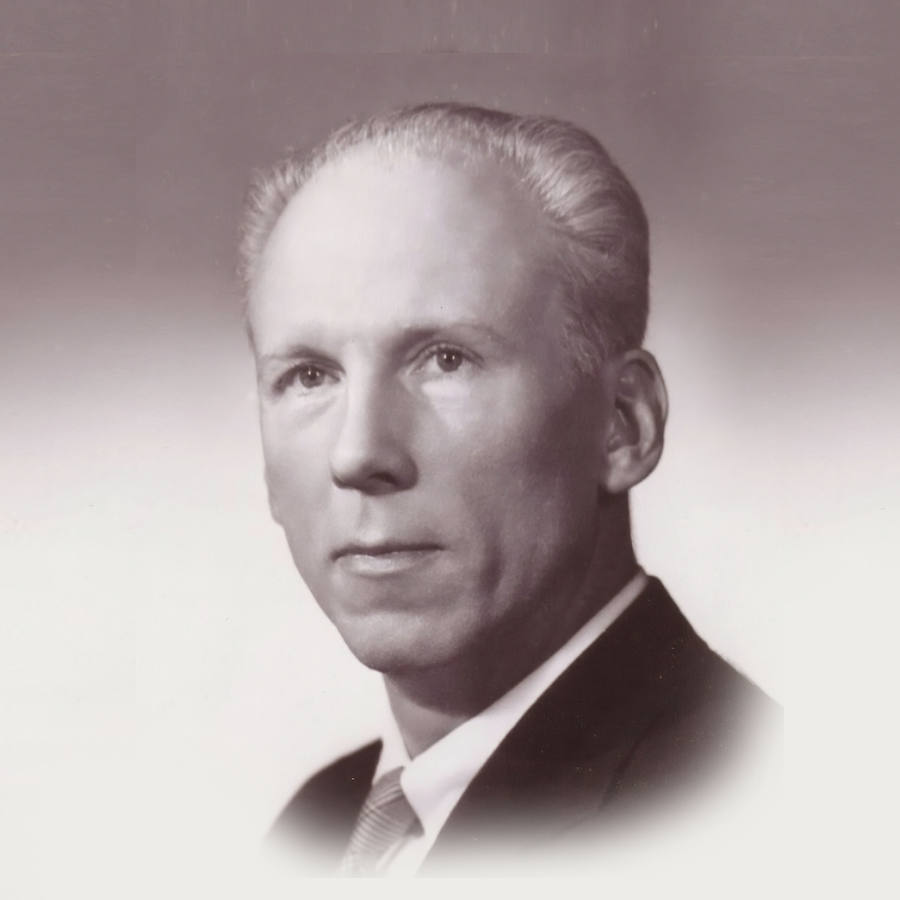
Leroy Anderson
Bio:Leroy Anderson (June 29, 1908 – May 18, 1975) was an American composer of short, light concert pieces, many of which were introduced by the Boston Pops Orchestra under the direction of Arthur Fiedler. John Williams described him as "one of the great American masters of light orchestral music." Born in Cambridge, Massachusetts to Swedish parents, Anderson was given his first piano lessons by his mother, who was a church organist. He continued studying piano at the New England Conservatory of Music. In 1925, Anderson entered Harvard College, where he studied musical harmony with Walter Spalding, counterpoint with Edward Ballantine, canon and fugue with William C. Heilman, orchestration with Edward B. Hill and Walter Piston, composition, also with Piston, and double bass with Gaston Dufresne. He also studied organ with Henry Gideon. He graduated with a Bachelor of Arts, magna cum laude in 1929 and was elected to Phi Beta Kappa. At Harvard University Graduate School, he studied composition with Walter Piston and George Enescu and received a Master of Arts in Music in 1930. Anderson continued studying at Harvard, working towards a PhD in German and Scandinavian languages; Anderson spoke English and Swedish during his youth, and eventually became fluent in Danish, Norwegian, Icelandic, German, French, Italian, and Portuguese. In 1942, Anderson joined the United States Army, and was assigned in Iceland with the U.S. Counterintelligence Corps as a translator and interpreter; in 1945 he was reassigned to the Pentagon as Chief of the Scandinavian Desk of Military Intelligence. His duties did not, however, prevent him from composing, and in 1945 he wrote The Syncopated Clock and Promenade. Anderson became a reserve officer and was recalled to active duty for the Korean War. He wrote his first hit, Blue Tango, in 1951, earning a Golden Disc and the No. 1 spot on the Billboard charts. For his contribution to the recording industry, Leroy Anderson has a star on the Hollywood Walk of Fame at 1620 Vine Street. He was posthumously inducted into the Songwriters Hall of Fame in 1988, and his music continues to be a staple of pops orchestra repertoire. In 1995 the new headquarters of the Harvard University Band was named the Anderson Band Center in honor of Leroy Anderson. The Leroy Anderson House in Woodbury, Connecticut has been placed on the National Register of Historic Places.
Titles:
- 1954 B344002 – Alma Mater: Scenes for Band
- 1961 A906790 – Arietta for Full Orchestra
- 1961 A906202 – Arietta for String Orchestra
- 1962 A906890 – Balladette for String Orchestra
- 1952 B400502 – Belle of the Ball for Band
- 2022 S1018CB – Belle of the Ball for Band – Second Edition
- 1951 A910390 – Belle of the Ball for Orchestra
- 1954 A910790 – Bluebells of Scotland, The (from Scottish Suite)
- 1962 A907190 – Captains and the Kings, The (full orchestra)
- 1946 A600490 – Chicken Reel
- 1951 A875790 – China Doll
- B355202 – China Doll for Band
- 2023 S1044CB – China Doll for Band – Second Edition
- 1962 A908390 – Clarinet Candy
- 1947 A908190 – Fiddle-Faddle for Strings with Piano (opt.)
- 1954 A604490 – First Day of Spring, The
- 1954/2024 S1060CB – Forgotten Dreams
- 1954/1956 B372102 – Forgotten Dreams for Band
- 1954 A604290 – Forgotten Dreams for Piano and Orchestra
- 1953 A875990 – Girl in Satin, The
- 2023 S1045CB – Girl in Satin, The (band version – second edition)
- B342902 – Girl In Satin, The (band version)
- 1962 A907290 – Golden Years, The
- 1962 A603690 – Goldilocks: Pirate Dance
- 1958/1962 A601090 – Goldilocks: Pyramid Dance (Heart of Stone) for Orchestra and Optional Chorus
- 1948 A909490 – Governor Bradford March
- 1962 A907090 – Home Stretch
- 1951 A600190 – Horse and Buggy
- 1952 B396802 – Horse and Buggy (band version)
- 2023 S1019CB – Horse and Buggy for Band – Second Edition
- 1944/2024 S1061CB – Jazz Legato
- 1944 A875690 – Jazz Legato for Full Orchestra
- 1944/2024 A937090 – Jazz Legato for Full Orchestra
- B343102 – Jazz Pizzicato for Band
- 2022 S1020CB – Jazz Pizzicato for Band – Second Edition
- 1938 A908790 – Jazz Pizzicato for Full Orchestra
- 1939 A908490 – Jazz Pizzicato for String Orchestra
- 1970 A908590 – Lullaby of the Drums
- 1978 A909790 – March of the Two Left Feet
- 1947 A909890 – Old MacDonald Had a Farm
- 1947/2026 A951190 – Old MacDonald Had a Farm [Rogers]
- 1947/2026 S1062CB – Old MacDonald Had a Farm for Band
- 2022 S1021CB – Penny Whistle Song for Band – Second Edition
- 1951 A875890 – Penny Whistle Song, The
- 2022 S1022CB – Phantom Regiment for Band – Second Edition
- 1951 B346002 – Phantom Regiment for Concert Band
- 1951 A601390 – Phantom Regiment, The
- 1954 A883090 – Sandpaper Ballet for Orchestra
- 1948 A604890 – Saraband
- 2023 S1046CB – Serenata
- 1947 A875590 – Serenata
- 1955 B400902 – Suite of Carols for Brass Choir
- 1955 B400802 – Suite of Carols for Woodwind Choir
- 1953 A604990 – Summer Skies
- 1953/1957 B362702 – Summer Skies for Band
- 1954 B353102 – The Bluebells of Scotland (from Scottish Suite)
- 1945 M916402 – Ticonderoga March for Band
- 1950 B400402 – Waltzing Cat, The (Band Version)
- 1950/2024 A942290 – Waltzing Cat, The (Orchestra Version)
- 1950 A910490 – Waltzing Cat, The (Orchestra Version)